How our Out-of-Home Advertising Presented Refreshing ‘We Make this City Work’ Frames in Chicago and Los Angeles
For labor contract campaigns, visibility is not a branding exercise. The same is true when a national party’s convention comes to your hometown. It is a strategic decision about where workers belong in the civic story and how their work should be valued.
For two recent SEIUcampaigns, Big Bowl of Ideas partnered with union leaders to use out-of-home (OOH) advertising. The work met people where they live and work – in airports, at grocery store kiosks, on freeways, and along daily commutes, bus routes and walks. And it made one thing unmistakable. Workers are not in the background of public life. They are the reason it functions.

Why OOH Matters in Contract Campaigns
Out-of-home advertising works differently than digital or social media.. It occupies shared space. It repeats. It makes an impression.
For campaigns, that matters.
OOH allows organizers to:
- Apply public pressure without chasing clicks
- Reach decision-makers and the broader public simultaneously
- Shape narrative in moments when negotiations stretch on
- Create an early positive amplifier for campaigns before the nitty-gritty of negotiations
When done poorly, OOH becomes vague or ornamental. When done well, it becomes unavoidable and memorable. These campaigns were designed with that distinction in mind.
Chicago: Claiming the Civic Gateway
In Chicago, the question was not whether people would see the campaign.
It was who needed to see it first.
For the SEIU Illinois State Council and SEIU HCII, a public awareness campaign was a perfect way to greet delegates, guests and media attending the Democratic National Convention. So only natural that it showed up at O’Hare International Airport, one of the worlds busiest airports. Elected officials, agency leaders, press, and business travelers pass through O’Hare every day. It is the front door to the city, and the messaging treated it that way.
The creative was deliberately declarative:
Welcome to Chicago.
Illinois works because we work.
We keep communities healthy.
We are SEIU HCII.
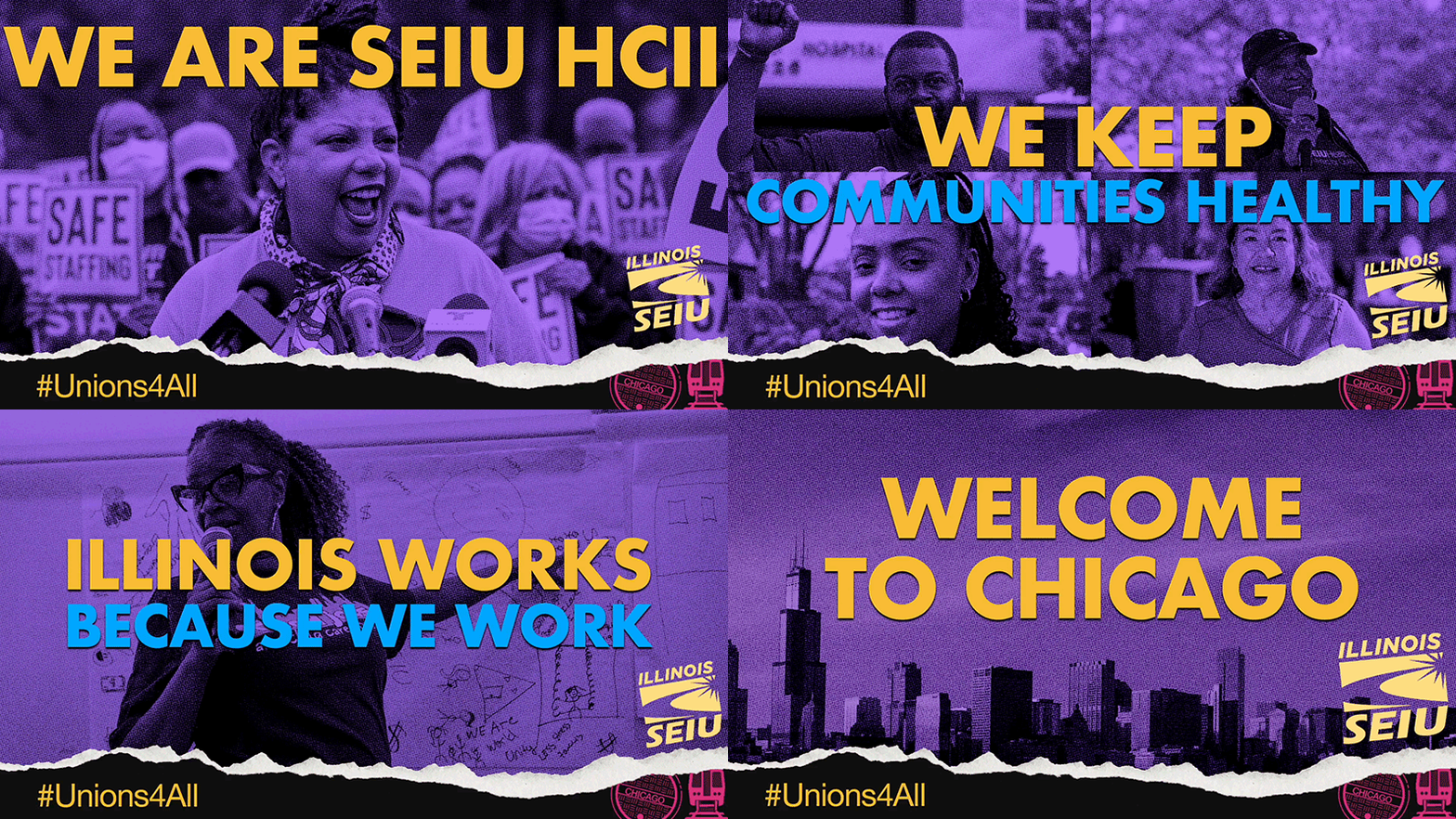
These were not asks. They were statements of fact.
Workers’ faces and voices appeared at scale, framed as the backbone of public health, safety, and care across Illinois. The design prioritized legibility and confidence. High-contrast color, minimal copy, imagery that reads instantly at walking speed. The work assumed repeated exposure and respected the intelligence of people moving through the space.
At a moment when negotiations were underway, the message at the city’s gateway was clear. Public sector workers are not an interest group. They are civic infrastructure.
Los Angeles: Visibility at the Scale of the City
For one of its largest contract campaigns with SEIU Local 721, the challenge was scale. Power in Los Angeles does not pass through one building or one corridor. It moves along freeways, across neighborhoods, and through long daily commutes.
The OOH strategy reflected that reality.
Large-format placements were designed for distance and speed, prioritizing bold visuals and concise language that could hold up at highway velocity. The creative emphasized repetition over novelty, understanding that in Los Angeles, familiarity builds legitimacy.
There were all forms of OOH Advertising utilized – Digital Billboards, Grocery Store Kiosks, ATMs, Coin Machines, Junior Billboards (at street level), Signage on Busses, Convenient Stores and more.
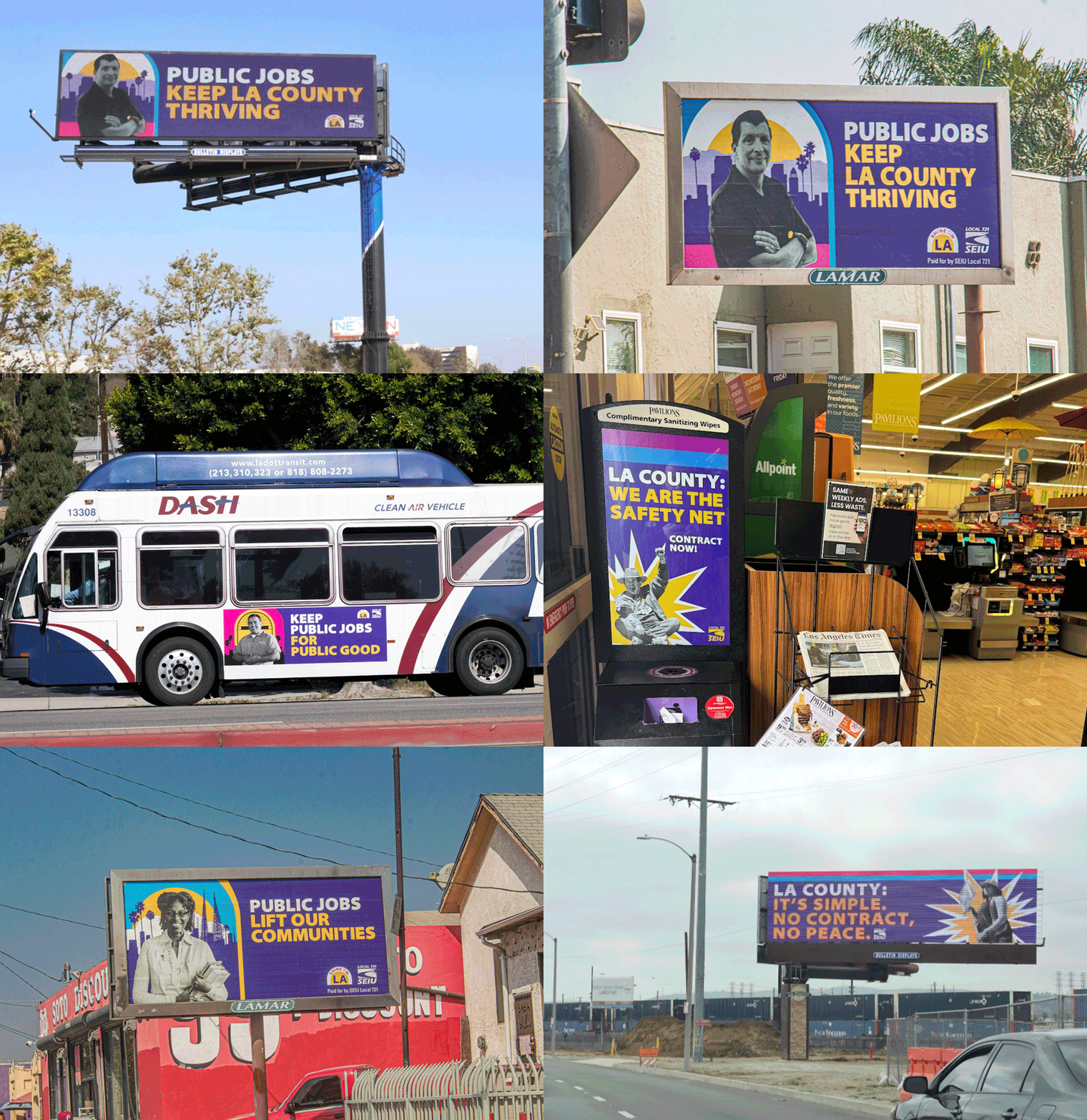
Rather than focusing on a single site of authority, the campaign stretched across the city, normalizing worker demands as part of everyday life. In a media landscape crowded with entertainment, advertising, and noise, the work made a different choice. Clarity. Workers were shown as essential, organized, and collective. Their demands were not framed as disruptions. They were framed as reasonable, overdue, and rooted in care for the communities they serve.
Working with our media buyer, we actually created a ‘local government rectangle’ that we drew by hand, knowing the buildings and sidewalks and retail landscape of downtown LA and where local government – and those who try to influence it – were known to frequent.
What These Campaigns Share
Chicago and Los Angeles are different cities with different rhythms of power. But the campaigns shared a common strategic foundation.
- Message discipline beats cleverness
- Place matters as much as copy
- Visibility changes internal power, not just external perception
- Public-facing work strengthens organizing
In both cases, the goal was not to persuade skeptics with arguments. It was to establish narrative authority in public space.
Designing OOH for Movements, Not Brands
At Big Bowl of Ideas, we approach out-of-home advertising as a movement tool, not a marketing tactic.
That means:
- Treating public space as shared civic terrain
- Respecting community voice as the protagonists of their own story
- Using simplicity as a political choice, not a creative shortcut
When workers claim the walls, the streets, the airport screens, and the commute, they do more than advertise. They assert who the city belongs to.
The City Is the Canvas
Contract campaigns are not abstract negotiations. They are struggles over whose labor is valued, whose voices are heard, and whose work is visible.
In Chicago and Los Angeles, these OOH campaigns made that struggle public, at scale, with confidence, and with clarity. They met people where power already moves and reminded them of a simple truth: Cities do not work by accident. They work because workers do.
See another effort in New York City with the PSA organization FY Eye, to promote ranked choice voting for the City of New York, via the use of pop art illustrations [insert hyperlink to that blog post]